
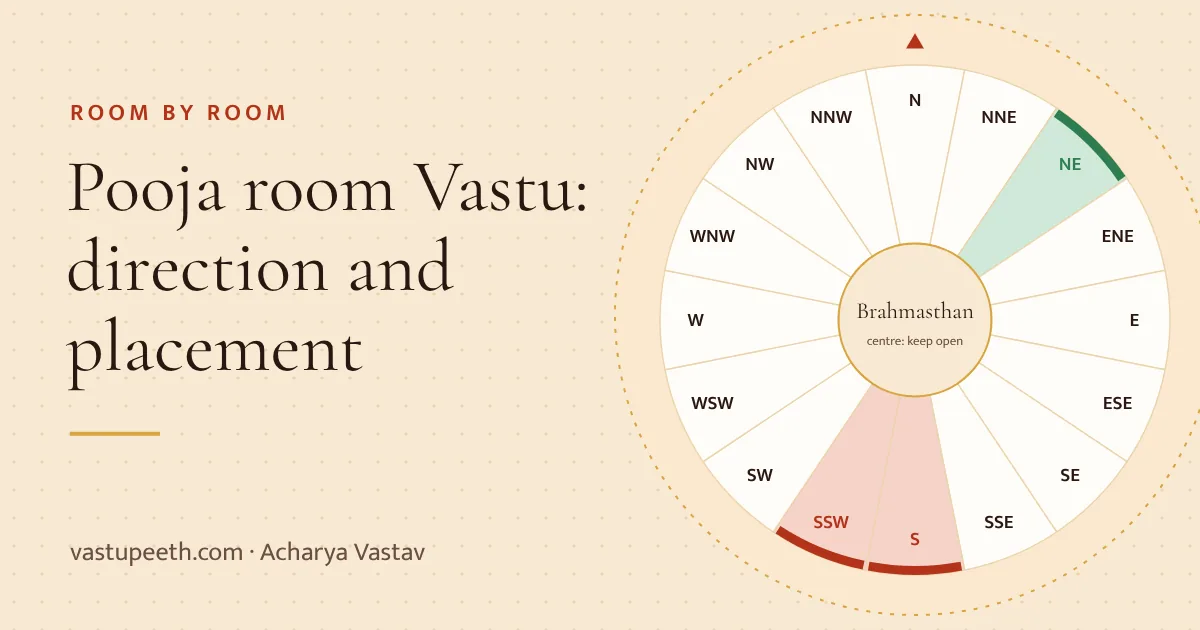
Pooja room Vastu gives a clear answer on direction: the North-east (NE) of your home is the best place for prayer. This zone is linked with clarity of mind and with the water element. A quiet, light corner here suits prayer and meditation well.
Wherever the shrine ends up, keep it out of the South and the South-south-west (SSW). The South is the zone of fame and rest, and the South-south-west handles disposal, so prayer does not sit well in either.
Below, we cover where the mandir should go and why the Ganesh idol belongs in the West. We also share fixes for flats with little choice.
Pooja room direction: start with the North-east
Vastu reads a home as 16 zones around its centre. Each zone is tied to one part of life. If the idea is new, begin with the 16 Vastu zones and what each governs.
The North-east governs calm thinking, understanding and a settled mind. That makes it the natural mandir direction in home planning. Prayer, reading and quiet sitting all match its nature.
Take your reading from the middle of the covered area of the home, never from the entrance. Stand there with a phone compass, find North, and then mark the North-east corner. Our North-east zone guide lists its colours and what disturbs it.
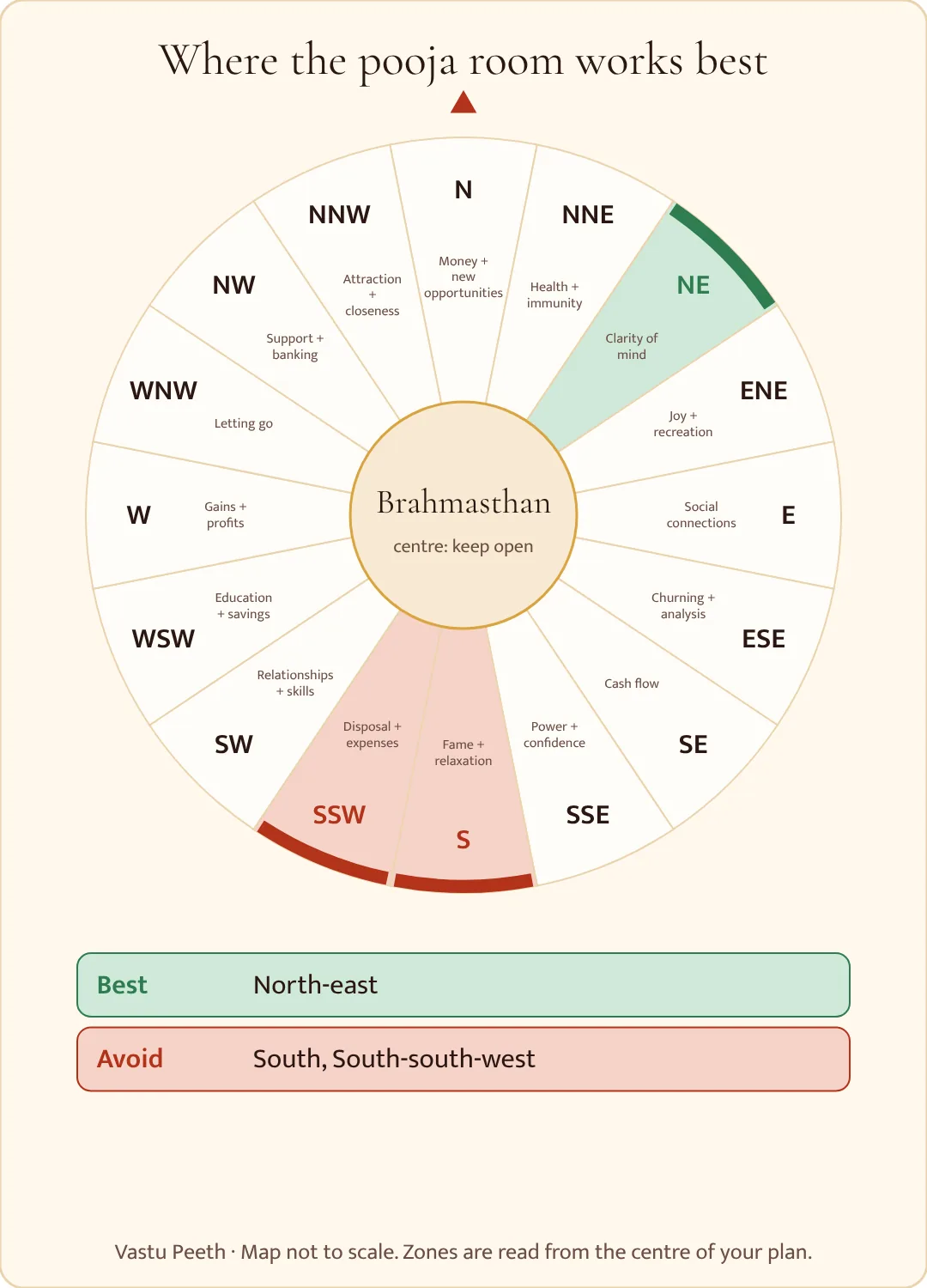
The diagram shows the 16-zone wheel. The North-east is marked green as the best zone for a shrine. The South and the South-south-west are marked red, as the zones to avoid.
How to set up the mandir in the North-east
A good prayer corner does not need much space. It needs light, order and a little daily care. Use this list as you set it up.
- Keep the corner open and bright. If there is a window, let the morning light reach the shelf.
- Choose white or light blue for the wall and the altar cloth. These are the water colours of this zone. Leave red paint and red bulbs out of it.
- Use a small wall-mounted mandir or a low wooden shelf. Heavy cabinets and steel almirahs belong in other zones.
- Keep a dustbin, shoe rack, inverter or storage boxes well away from this corner.
- Place a diya, a small pot of clean water and a few fresh flowers. Clear dried flowers every day or two.
- Keep puja items in one tidy box. Old calendars, extra lamps and spare idols only add clutter.
What decides the result is the zone the shrine sits in. Get the North-east right and keep it clean, and the corner does its work.
An Om or a trishul in the North-east is a symbol of a calm, clear mind. You can see where other symbols belong in our guide to Vastu symbols by zone.
Ganesh idol placement as per Vastu
Ganesha stands for removing obstacles and turning ideas into results. That is why his zone is the West, the zone of gains. Place the idol on a clean shelf in the West of the home or of your main room.
The North-east stays for prayer and a clear mind, and the West holds Ganesha. Nothing here is meant to worry you. A few simple points cover the rest.
- Keep one Ganesh idol for the home. Several idols in many corners can feel scattered, so we suggest you avoid that.
- Never fix the idol at the main door to keep negativity out. An idol there holds back the good as well. Never place a pair of idols back to back, facing opposite ways, at the door either.
- Seat the idol on a clean shelf or a small stool in the West. Avoid placing it straight on the floor.
- Pick a size that fits the space. A small idol on a small shelf looks settled.
- Keep shoe racks, dustbins and clutter away from the idol’s shelf.
- Dust it gently once a week. If an idol chips, retire it with respect and bring a new one. That is a matter of care, not bad luck.
If your idol now sits in the pooja corner, move it to a shelf in the West. The diya, water pot and Om can stay in the North-east.
His form also carries a few gentle lessons. The large head is read as thinking big, the wide ears as listening more, and the small eyes as focus. Some people like to keep these ideas in mind while they pray.
Common pooja room Vastu mistakes
These are the slips we see most often in homes and flats. Each one is easy to correct.
- A mandir in the South-south-west. This zone handles disposal, which suits a toilet or a dustbin far better than prayer.
- A mandir in the South. This zone is for fame and rest, so keep prayer out of it.
- A North-east crowded with a storeroom or heavy cupboards next to the shrine. This zone needs open, light space.
- A toilet in the North-east beside the prayer corner. Our post on the right zones for a toilet explains your options.
- Broken idols and faded pictures kept out of guilt. Retire them respectfully and keep the shelf light.
- Red walls or red lights in the North-east. Red is a fire colour and clashes with this water zone. White light suits it better.
- A Ganesh idol fixed at the main door. Move it to the West.
Simple fixes when the North-east is not free
Many flats have a toilet, kitchen or bedroom in the North-east. You do not need to break walls to pray well. Try these steps instead.
- Find the North-east corner of the room you use most, such as the living room. A wall-mounted mandir there works well.
- If your shrine now sits in the South or the South-south-west, shift the idols to that new corner. Use the old shelf for books or plants.
- If the North-east of the home holds a toilet, that toilet is best moved. Take advice before any building work.
- In a rented home, choose a freestanding shelf or a hanging mandir that needs no drilling.
- Light a soft lamp in the corner each evening, so the space stays in use.
A calm prayer corner and a calm mind go together. Our page on Vastu for a peaceful, rested mind covers the other zones linked with calm.
Quick reference for your prayer space
| Item | Best place | Avoid |
|---|---|---|
| Mandir or pooja room | North-east | South and South-south-west. |
| Ganesh idol | West, one idol only | At the main door, or a pair facing opposite ways. |
| Wall and cloth colour | White, light blue | Red. |
| Diya and water pot | North-east corner | Next to a dustbin. |
| Om or trishul | North-east | A cluttered shelf. |
| Dustbin | East-south-east or South-south-west | North-east. |
When to ask an expert
Some homes need a closer look. Ask for help if the North-east holds a toilet or kitchen. The same goes for a cut corner, or a remedy that seems to clash with another zone. A remedy in the wrong zone can add a new imbalance, so it pays to check first.
Prayer also sits well with the habits in our post on the zones that support good health. Vastu supports your well-being. It never replaces a doctor.
Good pooja room Vastu stays simple: the North-east for prayer, the West for Ganesha, light colours and daily care. When you want Acharya Vastav to study your own layout, you can book a Vastu consultation with us.
Frequently asked questions
Where should the mandir go in a flat?
Set the mandir in the North-east of the flat, or in the North-east of your main room if the flat’s North-east is taken. Keep it out of the South and the South-south-west. A clean, well-lit shelf there is all you need.
Can I make a pooja corner in a rented home?
Yes. A freestanding shelf or a hanging mandir needs no drilling and moves with you. Place it in the North-east of the living room and keep the area light and clutter-free.
Where should the Ganesh idol be kept at home?
Keep one Ganesh idol in the West, the zone of gains. Never fix it at the main door, and never keep a pair facing opposite ways there. If you receive a second idol as a gift, keep it in a cupboard with care or pass it on.
Is pooja room Vastu only for Hindu families?
No. Vastu is about space and nature, and people of every faith use it. Any quiet place for prayer, reading or meditation suits the North-east of the home.
